Industry
The complete guide to conversational AI platforms in 2026

Written by

Julia Szatar

Conversational AI platforms let businesses hold natural conversations with customers at scale, across chat, voice, and increasingly video. The MarketsandMarkets forecast puts the market at $49.80 billion by 2031, up from $17.05 billion in 2025, a 19.6% compound annual growth rate.
To help you compare the growing list of options, we've updated our roundup to cover 20+ conversational AI platforms on the market today, from developer-first video and voice infrastructure to enterprise chatbot suites.
A conversational AI platform is the infrastructure for building and running AI agents that hold natural, multi-turn conversations, connect to backend systems, and operate across chat, voice, and increasingly visual channels. It's the layer product teams build on; the assistant your customers actually meet is what you create with it.
Gartner defines them as "platforms primarily used for developing applications simulating human conversation across multiple channels and on a mix of modalities such as text, voice and visual content," combining classic natural language processing (NLP) with generative and agentic AI architectures. Most provide low-code and no-code design tools alongside developer APIs, and they serve both customer-facing and employee-facing use cases.
Conversational AI is designed to understand, process, and respond to human language, mimicking real conversations and improving through interaction. It relies on NLP and dialogue systems to comprehend and engage in contextually relevant dialogue, primarily serving customer support and communication.
Chatbots, a subset of conversational AI, are typically designed for specific, rule-based tasks using simpler machine learning algorithms. They handle straightforward interactions but lack the depth to manage open-ended conversations like more advanced conversational AI.
Generative AI once sat apart as a content-creation category. That separation has collapsed. In 2026, most enterprise conversational platforms evaluated here are built on large language models (LLMs), the generative models that read context and produce responses. Many now add agentic behavior: the agent decides how to resolve a request, calls tools, and completes tasks with limited human input.
Conversational AI operates through several layered technologies to simulate human-like dialogue. The process begins with natural language understanding (NLU), where the AI interprets the user's input to grasp context and intent. It then uses natural language generation (NLG) to craft a coherent, contextually appropriate response.
These systems rely on machine learning to improve responses by learning from each interaction. Over time, they handle more diverse and complex conversations. In 2026, the fastest-moving part of the category is real-time voice and video: platforms that respond, perceive tone, and adapt mid-conversation instead of waiting for a full turn to end.
The conversational AI software market spans real-time face-to-face infrastructure, contact-center suites, employee-service platforms, and developer APIs. Every platform card below uses the same fields so you can compare like for like.

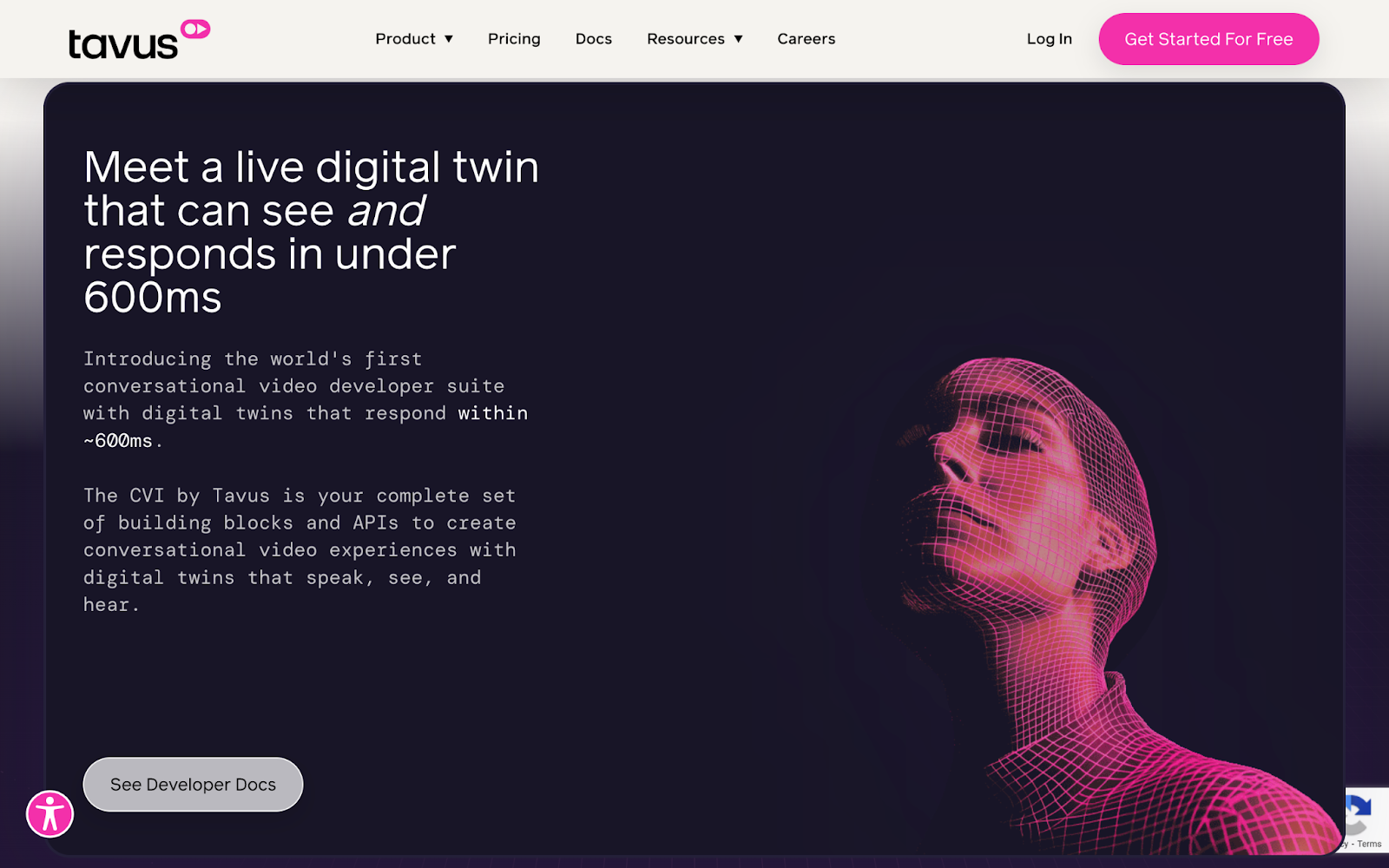
Tavus is the human computing company building Personified Application Layers (PALs), real-time applications that see, hear, remember, and respond face-to-face, into your product through live, two-way conversation over WebRTC. As infrastructure, the Conversational Video Interface (CVI) carries your brand, your knowledge, and your LLM if you bring one.
Best for: product teams adding real-time face-to-face conversation to their applications through an API, built on the behavioral stack.
Key features:
These components make CVI a full-stack option for teams that want video presence, perception, and grounded reasoning in the same API.
Pricing (developer plans):

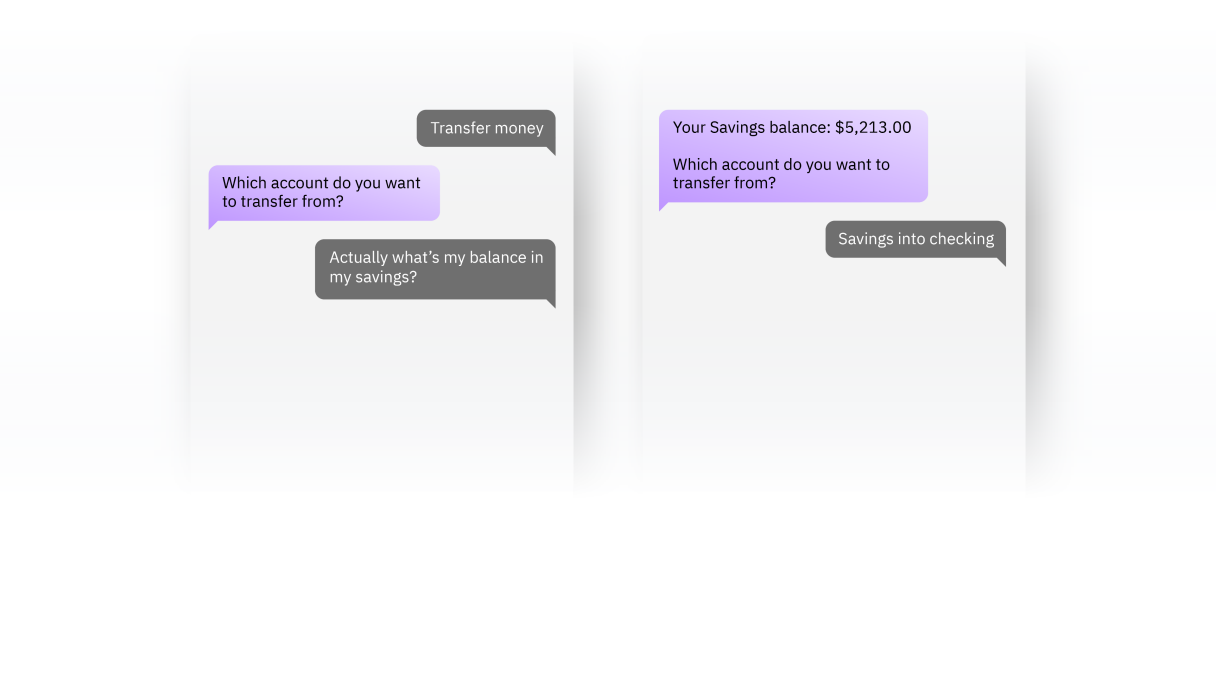
IBM watsonx Assistant (formerly IBM Watson Assistant) is a conversational AI platform designed to handle customer care across various industries. It supports non-technical users with drag-and-drop conversation builders and pre-built templates, giving customers a self-service option when human agents aren't available.
Key features:
Pricing:

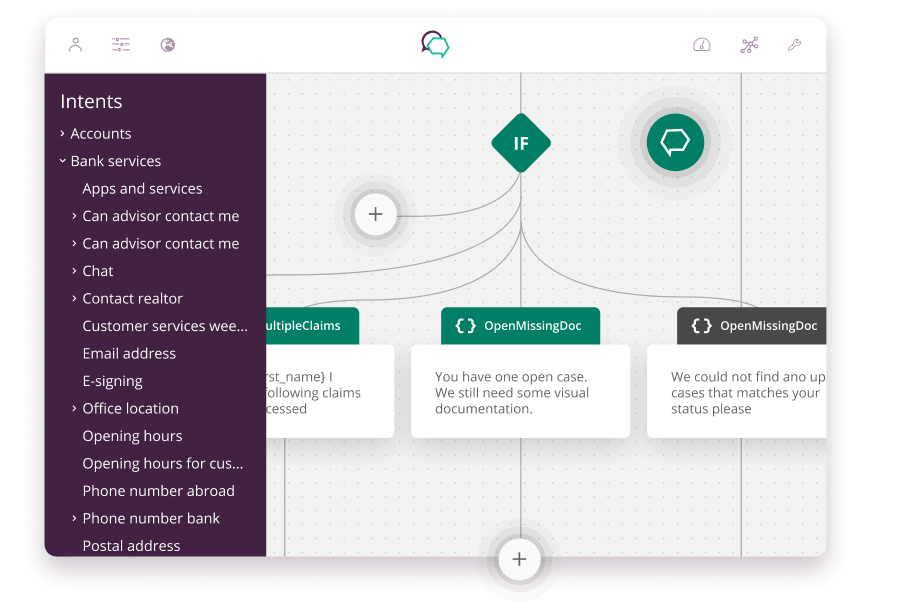
Boost.ai offers a conversational AI platform built for customer service and internal support in regulated industries like banking, insurance, and the public sector. It combines traditional NLU with LLM orchestration so teams can hand off specific query types to whichever engine handles them best, and it reports more than 650 live deployments and 150 million-plus automated conversations to date.
Key features:
Pricing: Quote-based only. Boost.ai doesn't publish self-serve pricing; third-party estimates put typical enterprise contracts starting around $50,000/year.

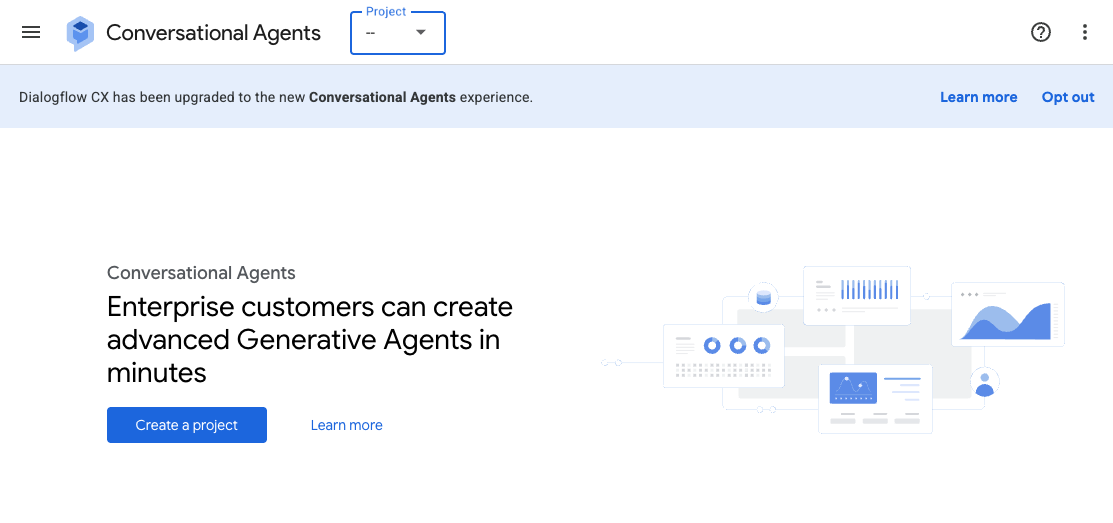
Google has folded Dialogflow into its broader Conversational Agents product on Google Cloud, though the CX and ES editions are still commonly called Dialogflow. Dialogflow CX takes a state machine-based approach to agent design, offering explicit control over conversation flow, while integrating Google's LLMs to parse content and generate responses.
Key features:
Pricing:

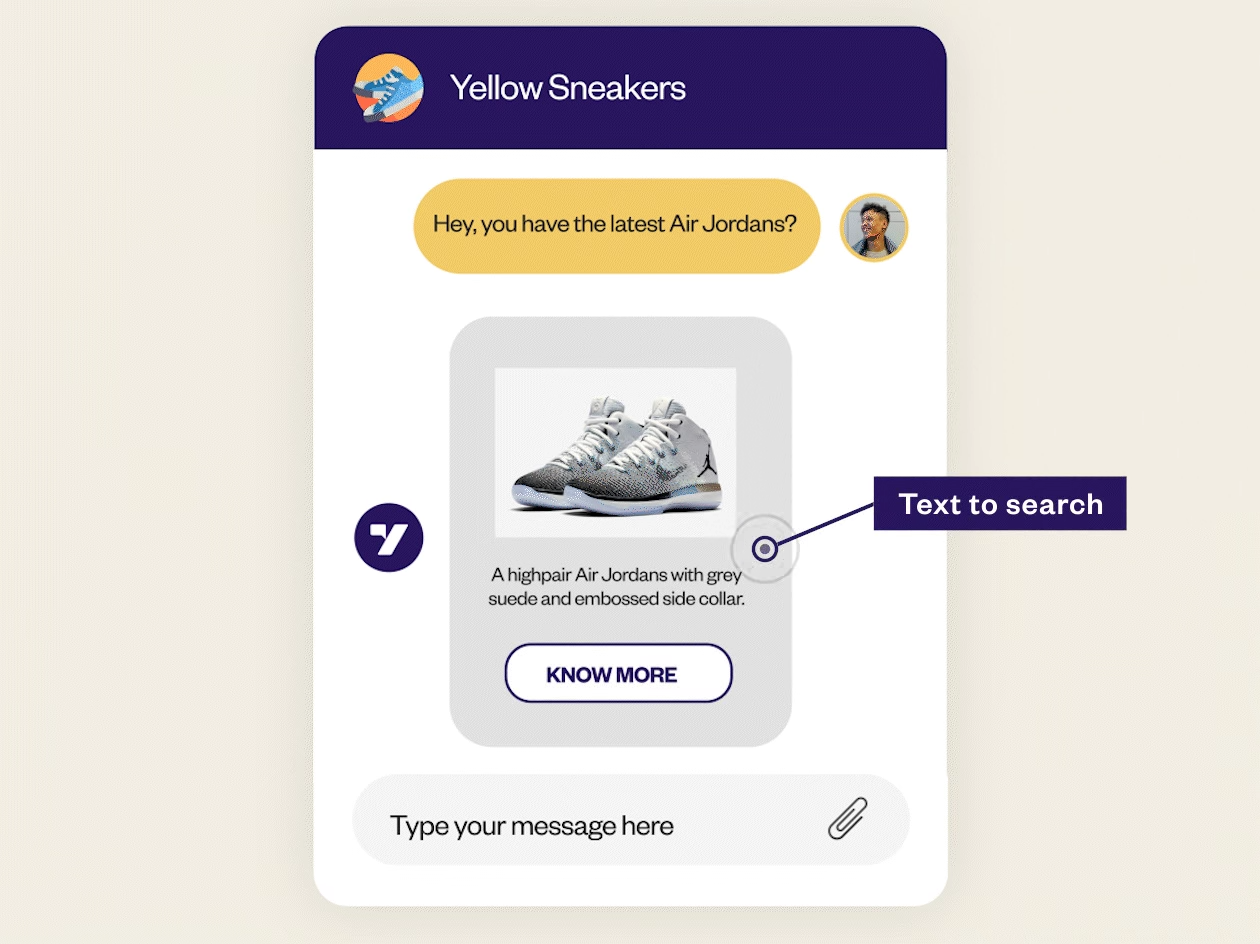
Yellow.ai offers a conversational AI platform designed to automate both customer and employee interactions across channels, now positioned around "agentic AI": agents that execute multi-step workflows and hand off to humans with context intact. Yellow.ai markets itself to large enterprises and reports over 1,300 enterprise customers, including Sony, Domino's, and Hyundai.
Key features:
Pricing:
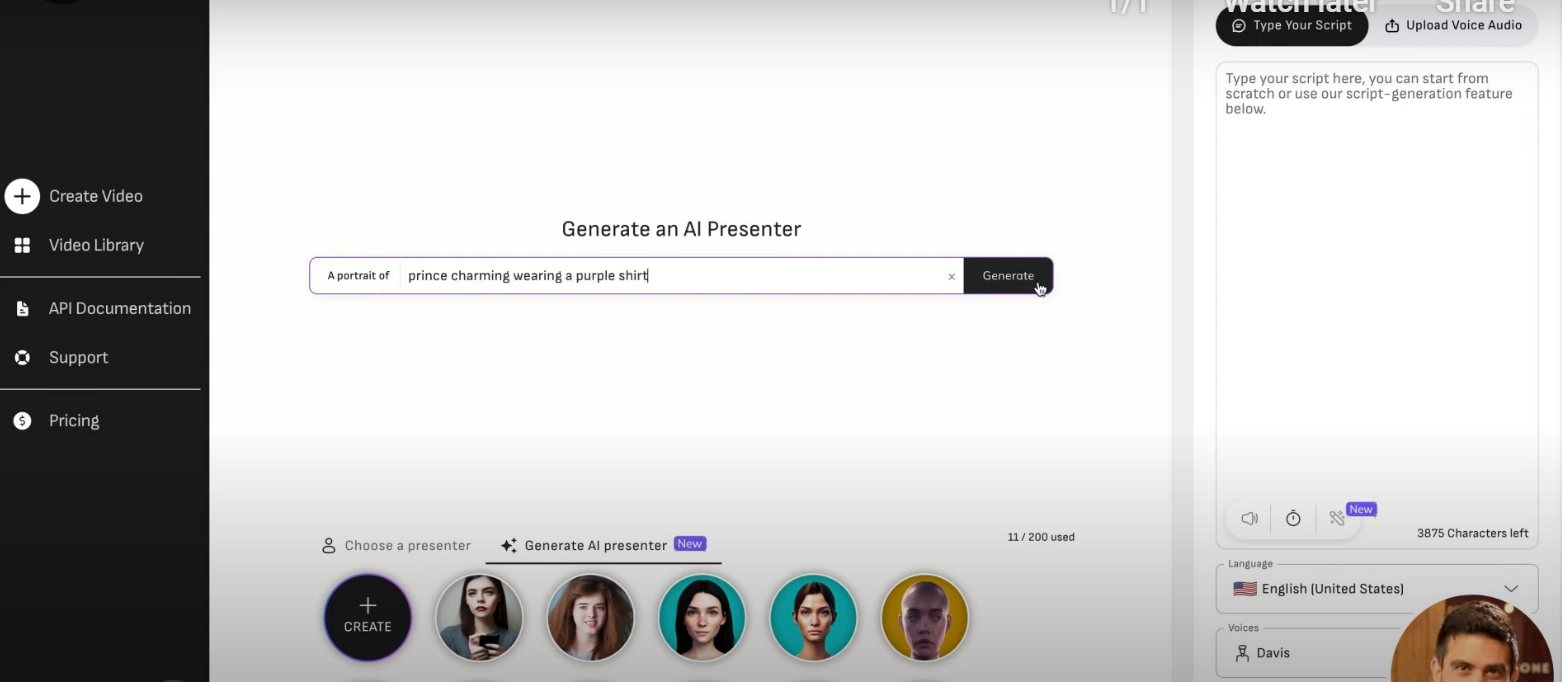
D-ID delivers conversational AI with digital humans, combining its facial animation technology with speech and video so users can engage with AI in a more human-like way. D-ID's product line spans its Creative Reality Studio, AI Avatars, Video Translate, and a Visual AI Agents API for embedding talking-head video into other applications.
Key features:
Pricing:
Amazon Lex provides a platform for building conversational interfaces into applications using voice and text. It uses the same deep learning technologies that power Amazon Alexa and integrates natively with other AWS services to build and deploy conversational bots.

Key features:
Pricing: Pay-as-you-go, with no upfront fees.
Kore.ai offers a conversational and agentic AI platform that lets businesses automate interactions across customer and employee touchpoints. It's recognized as a Gartner Magic Quadrant Leader in Conversational AI and supports multi-agent orchestration with 100+ pre-built connectors.
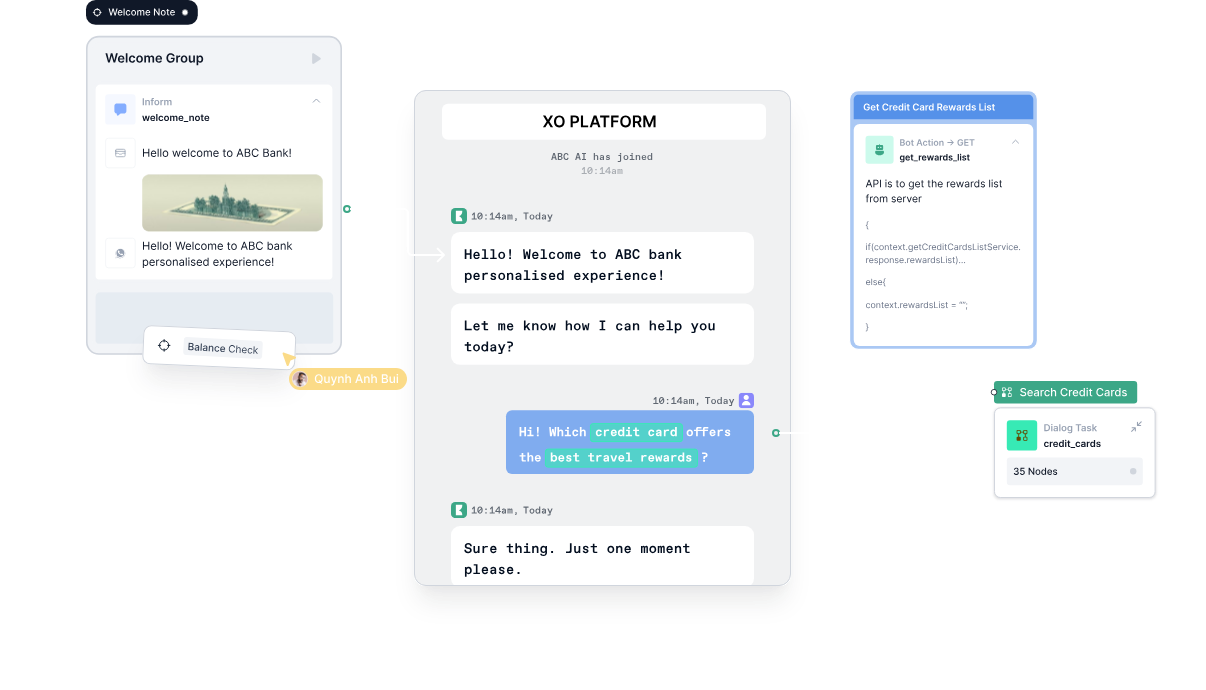
Key features:
Pricing:

OpenAI's models, including its GPT-5.x family, can generate human-like text and hold open-ended conversations, and are widely used as the reasoning layer behind other companies' conversational AI products. ChatGPT itself has also expanded well past a single $20/month plan.
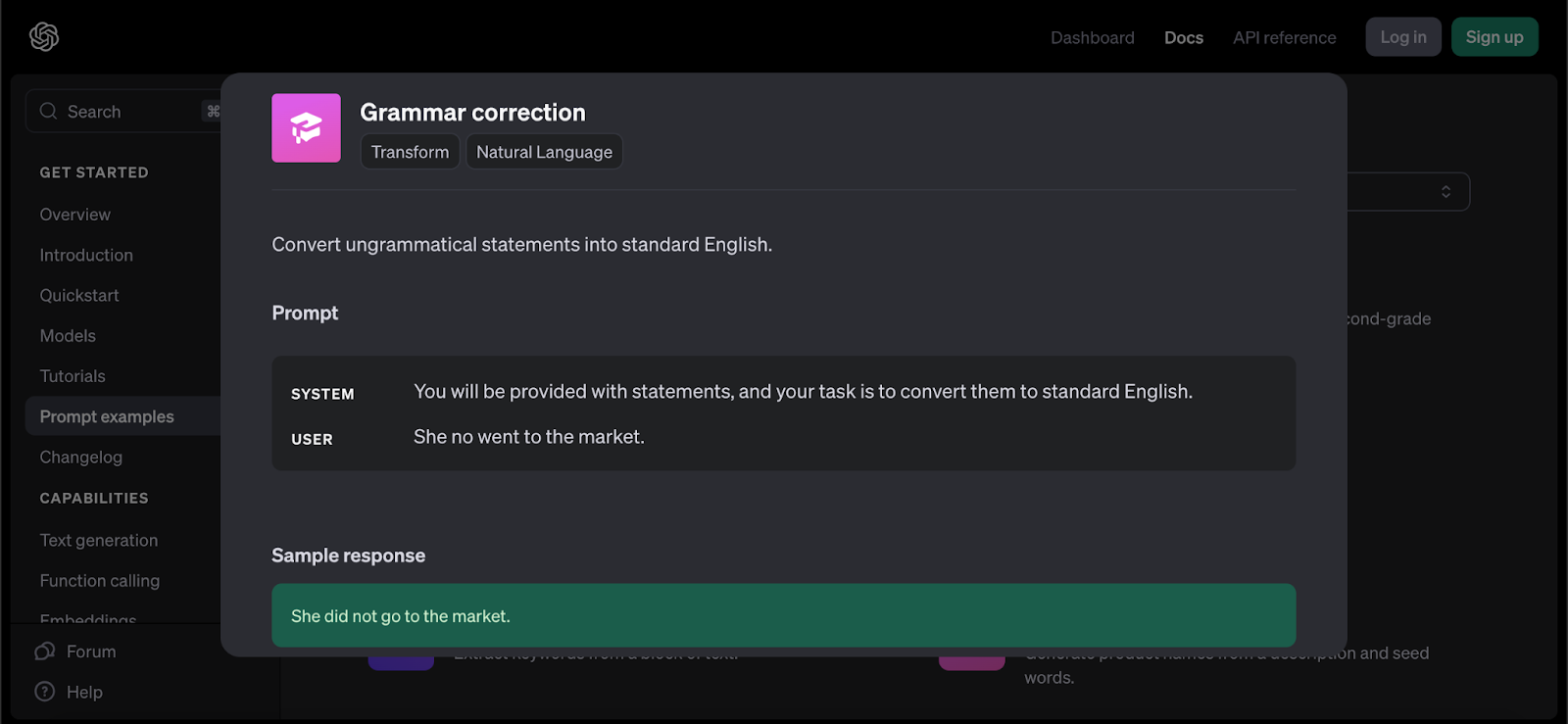
Key features:
Pricing (ChatGPT, as of mid-2026):

Avaamo offers a conversational AI platform tailored for large enterprises, supporting integration across business processes and communication channels. It uses generative AI to deliver virtual assistants that handle customer, employee, and patient experiences, and was named a Leader in the 2025 IDC MarketScape for conversational AI platforms.
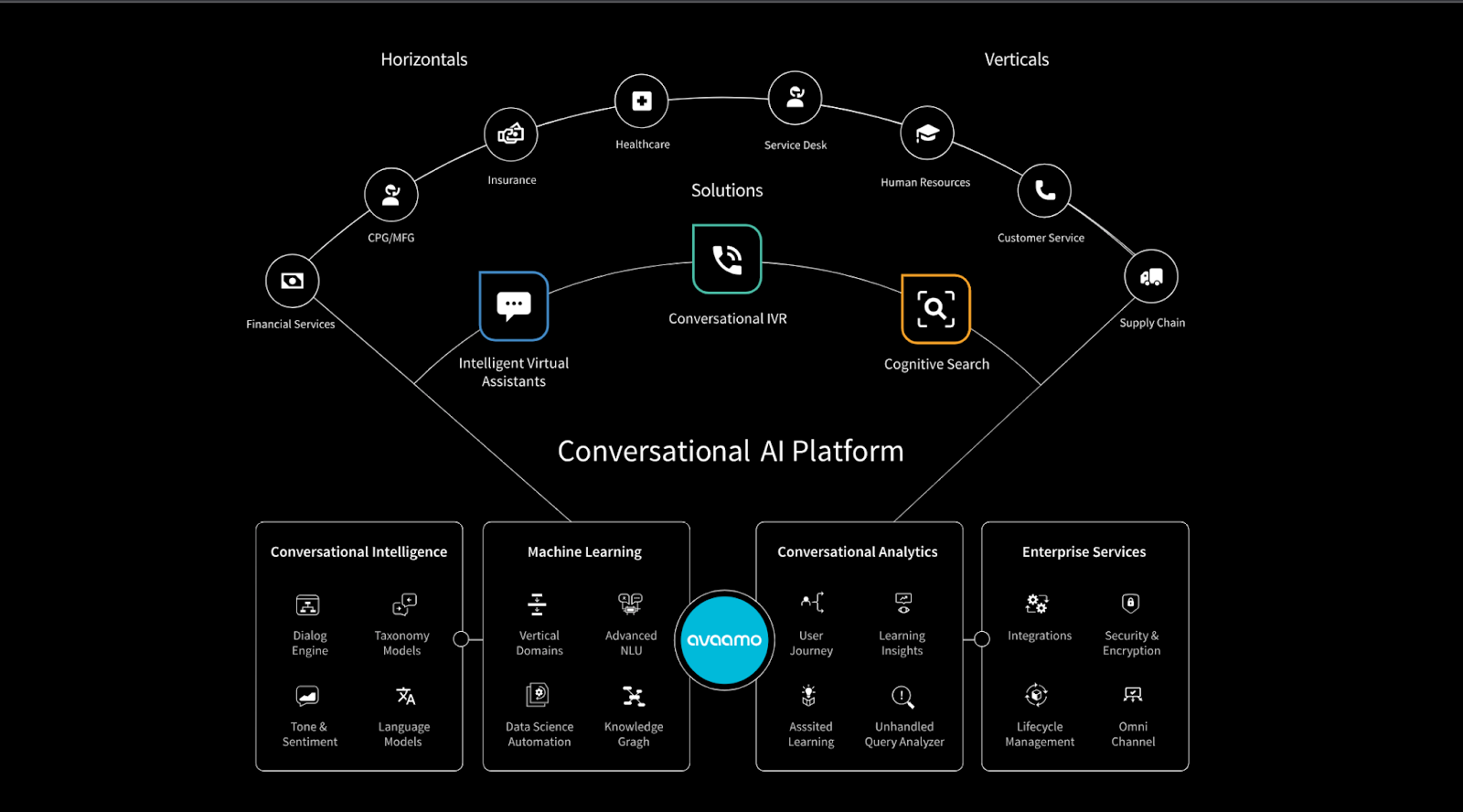
Key features:
Pricing: Contact the Avaamo sales team for pricing; the platform is fully quote-based with no published self-serve tiers.
Oracle has folded its conversational assistant capabilities into Oracle AI Agent Studio for Fusion Applications, a broader platform for building, connecting, and running agentic applications directly inside Oracle's ERP, HCM, and CX suites. Conversational and agentic capabilities are increasingly bundled with existing Fusion Applications subscriptions rather than sold as a separate product.
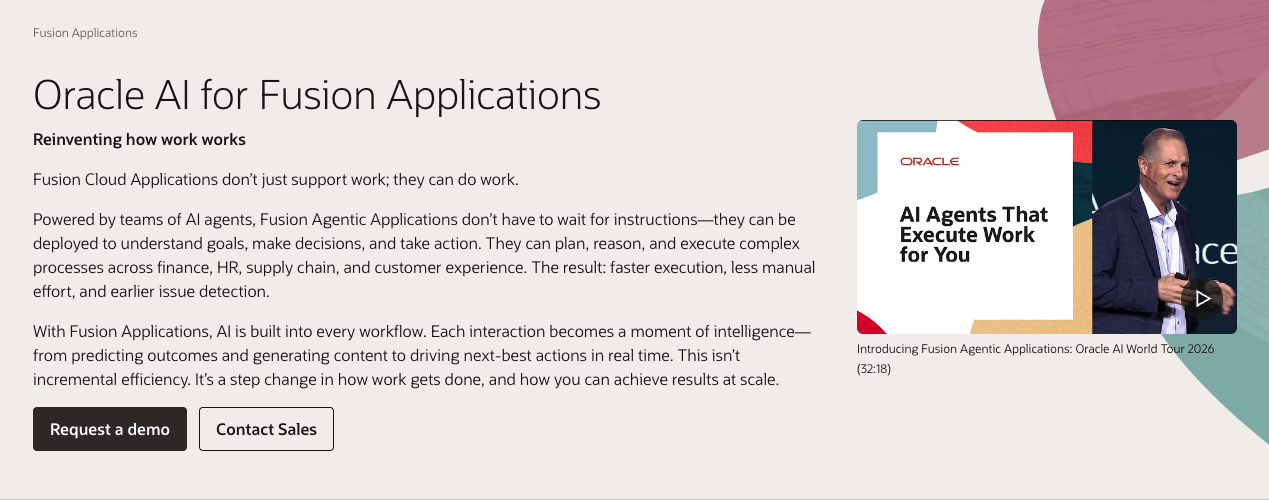
Key features:
Pricing: Largely included with existing Oracle Fusion Applications subscriptions; standalone or expanded usage is quoted through Oracle sales.
Tars provides a conversational AI platform marketed for lead generation, customer experience, and employee productivity, best known for its conversational landing pages that replace static forms. Tars no longer publishes self-serve tiered pricing.
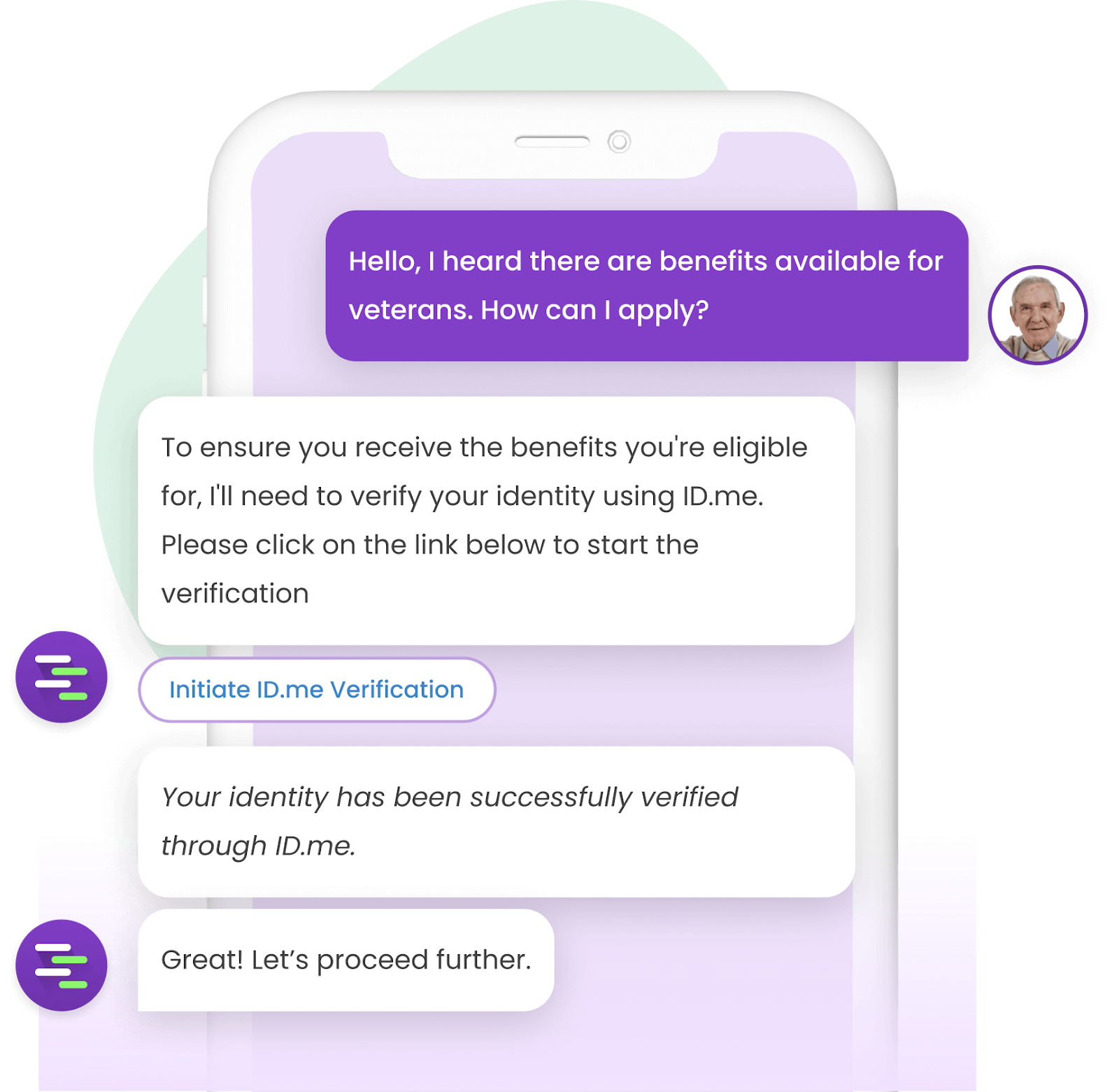
Key features:
Pricing: Quote-based only. Tars offers a free trial, but paid plans are no longer published; third-party sources report typical contracts starting around $500/mo and scaling with volume.

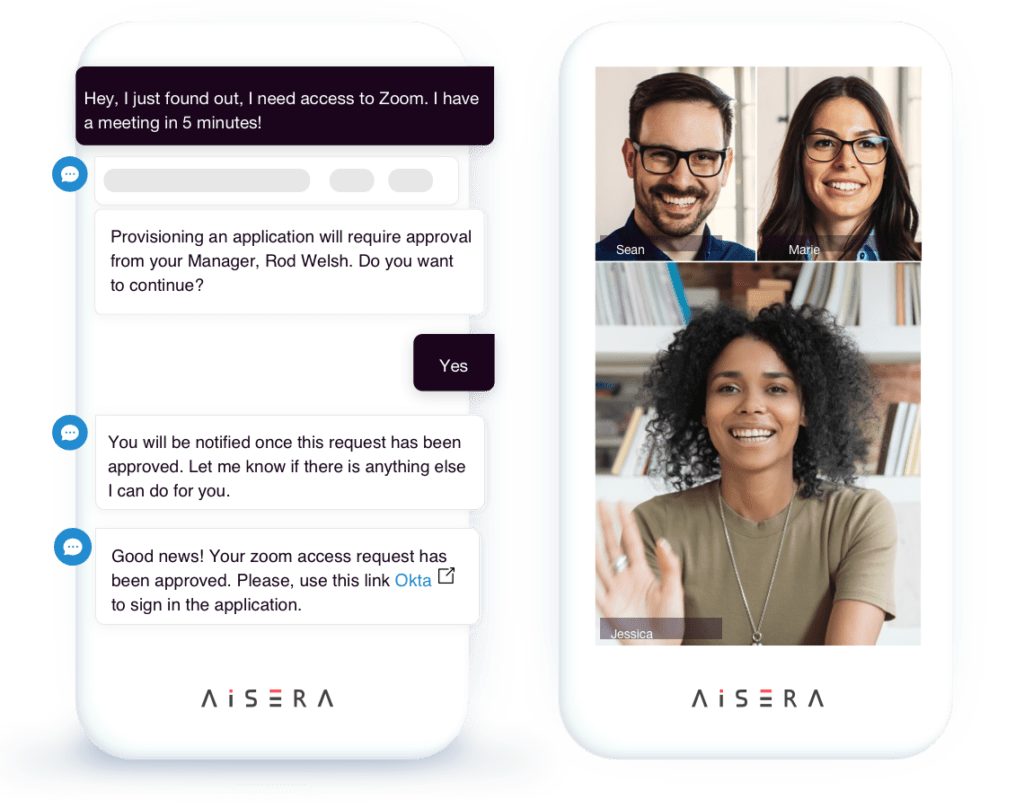
Aisera's conversational AI platform automates customer and employee experiences across industries using NLP and NLU, with virtual assistants that can handle interactions in over 100 languages. Automation Anywhere acquired Aisera in November 2025, and Aisera's self-service agents now operate as part of Automation Anywhere's broader agentic automation portfolio for IT, HR, and customer service.
Key features:
Pricing: Quote-based, negotiated through Automation Anywhere's enterprise sales process.

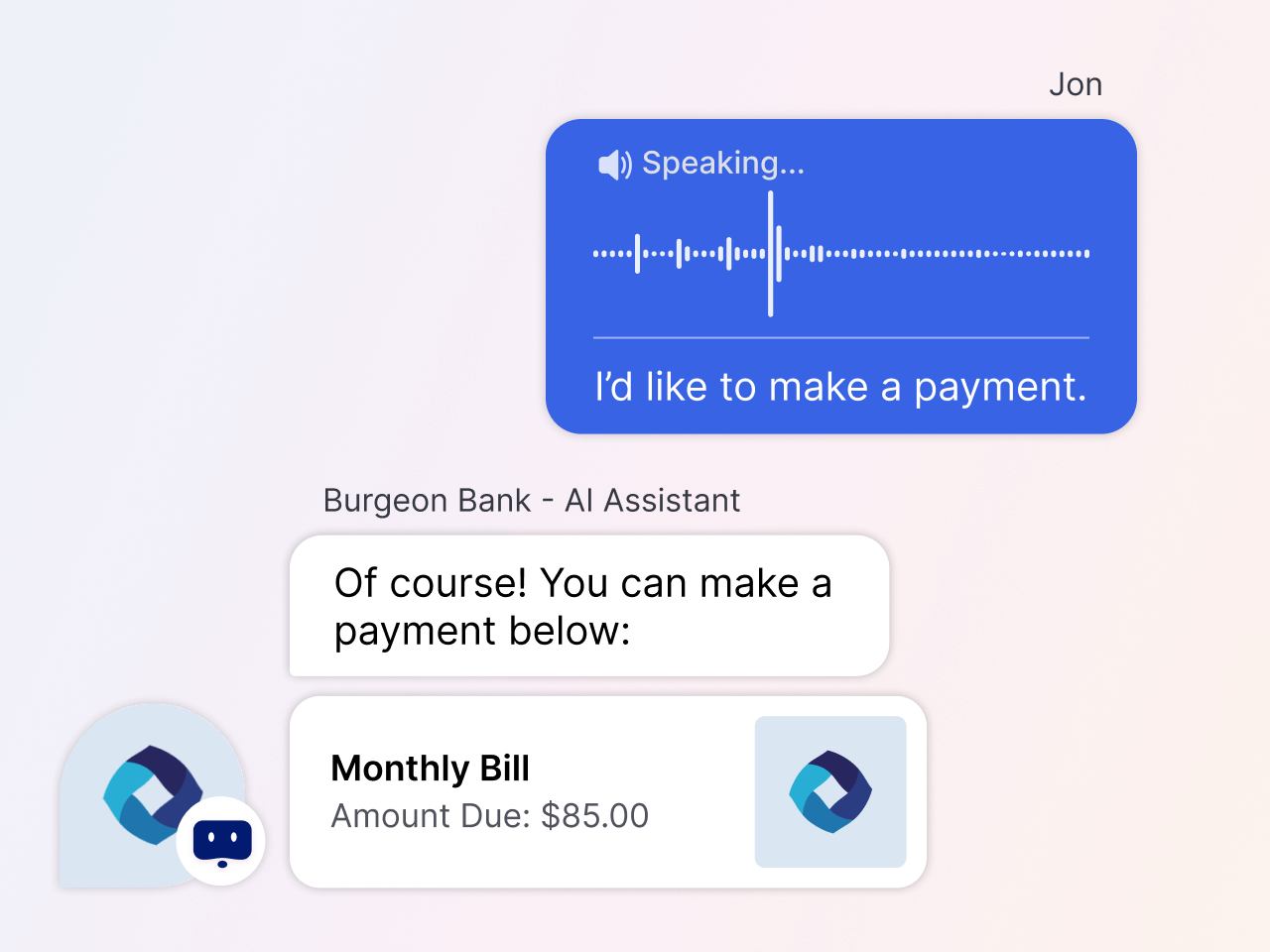
LivePerson's Conversational Cloud uses AI to support customer interactions across digital channels, positioning itself around "predictable conversational AI" and AI agent evaluation tools for contact centers. LivePerson has agreed to be acquired by SoundHound AI, a deal announced in April 2026 and expected to close in the second half of 2026, combining LivePerson's digital engagement platform with SoundHound's voice AI.
Key features:
Pricing: Contact the LivePerson team for pricing.

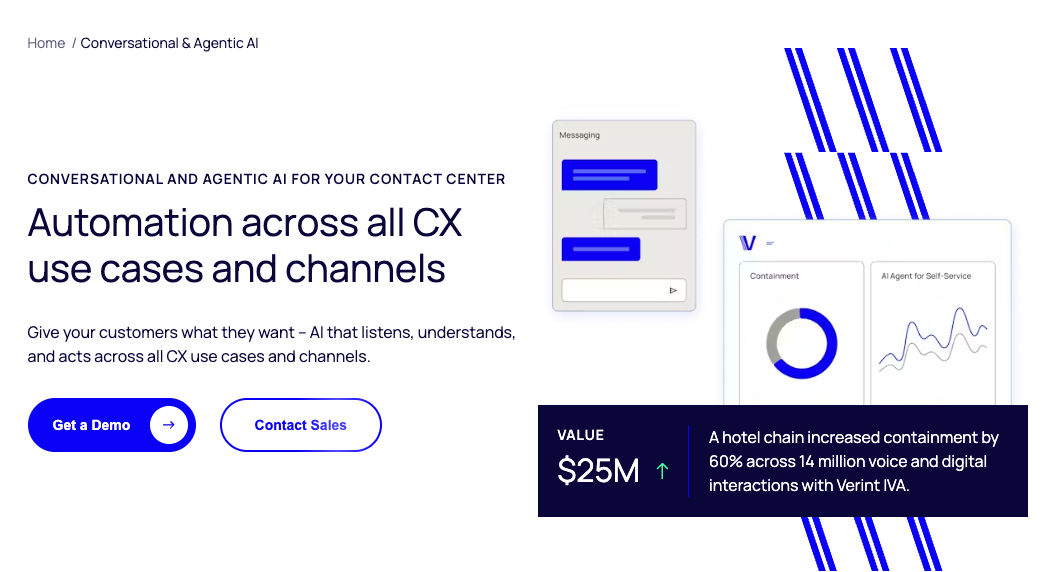
Verint offers a conversational AI platform for customer service operations across channels, including an Intent Discovery Bot that analyzes engagement data (call recordings, emails, chats, and support tickets) to identify what customers want. Thoma Bravo took Verint private in November 2025 and combined it with Calabrio to form what the companies describe as the industry's broadest AI-powered CX automation platform.
Key features:
Pricing: Contact the Verint team for pricing.

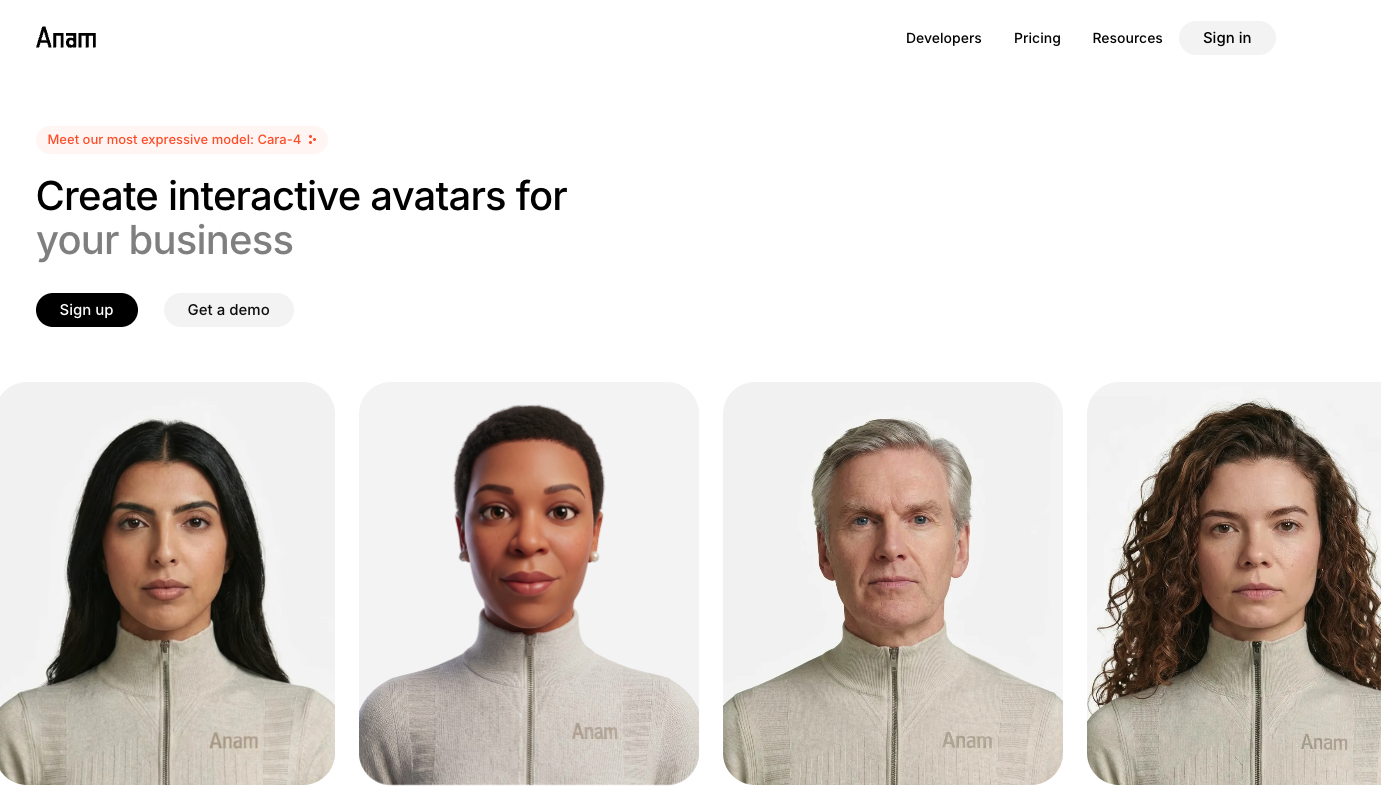
Anam is a real-time interactive AI avatar API built for live, two-way conversations rather than pre-rendered video. Its CARA-4 model targets roughly 180ms latency and supports 70+ languages, and Anam is one of the platforms most frequently evaluated alongside Tavus for real-time conversational video.
Key features:
Pricing: Free tier available; paid plans include a bundle of minutes with overage typically quoted around $0.11 to $0.16/min. Effective per-minute cost on standard plans runs closer to $0.20/min once the included allowance is used. Enterprise pricing is custom.
Soul Machines builds autonomously animated "Digital People" powered by its patented Digital Brain and Autonomous Animation technology, aimed at enterprise digital human deployments in banking, automotive, and healthcare. Customers include ANZ Bank, Mercedes-Benz, and UCSF Health.
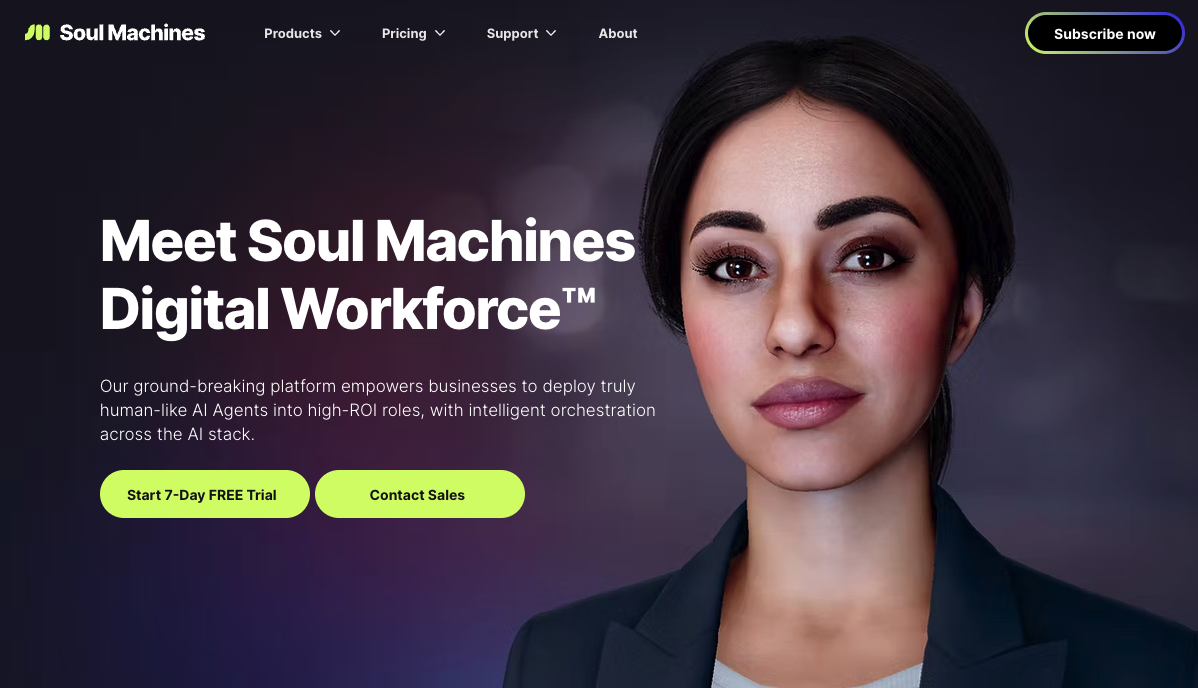
Key features:
Pricing: Quote-based only, structured around subscription and usage fees that vary by deployment scale and integration needs. Contact Soul Machines sales for pricing.
ElevenLabs built its name in text-to-speech and voice cloning, and has expanded into real-time voice agents through its Conversational AI (Agents) product, positioning it as a direct alternative to Vapi, Retell AI, and Bland AI.
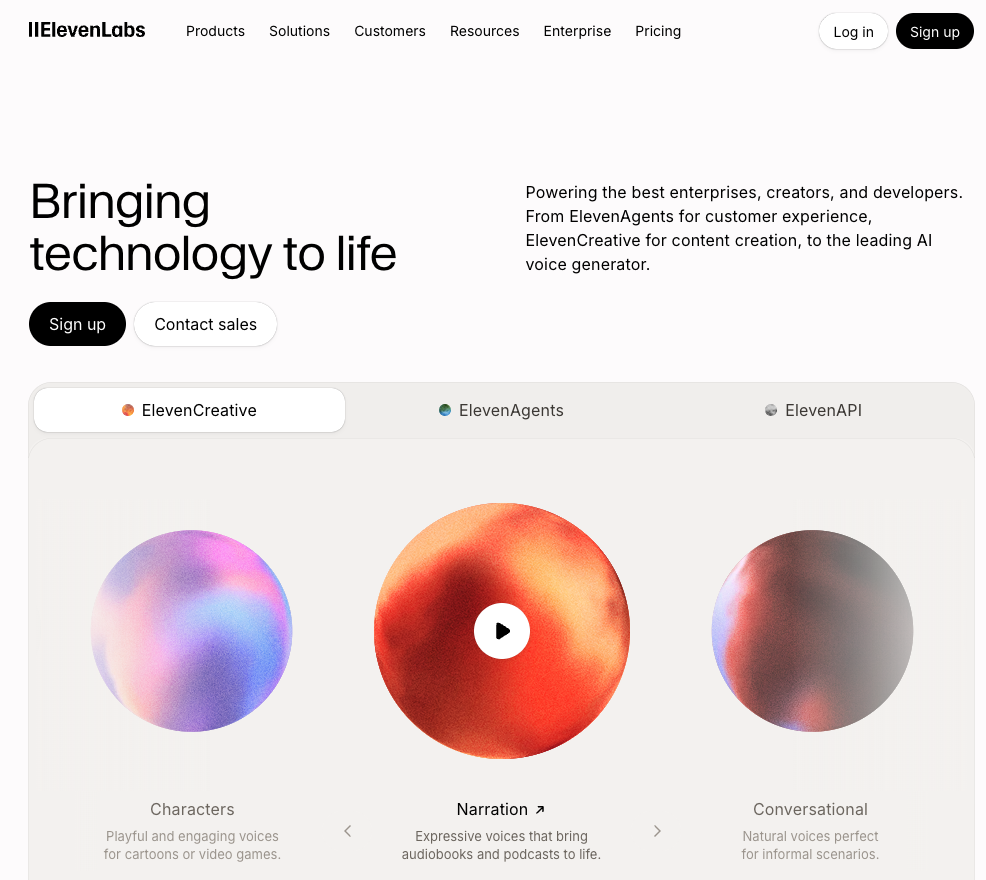
Key features:
Pricing:
Retell AI is a developer-focused platform purpose-built for voice AI phone agents, with transparent, published per-component pricing rather than a flat subscription.
Key features:
Pricing: Pay-as-you-go, no monthly platform fee. Voice engine starts at $0.07 to $0.08/min; a full stack with LLM and telephony typically lands around $0.11 to $0.31/min depending on model choice. Enterprise: managed onboarding starting around $8,000/mo, or custom.
Vapi is a developer platform for building and orchestrating voice AI agents, letting teams bring their own speech-to-text, LLM, text-to-speech, and telephony providers rather than locking into one stack.
Key features:
Pricing: Pay-as-you-go, starting at $0.05/min for the orchestration layer (STT, LLM, TTS, and telephony billed separately, typically bringing the all-in cost to $0.10-$0.30/min). Enterprise: custom, with unlimited concurrency and 24/7 support.
Twenty platforms is a lot to hold in your head at once. The table below distills each one to the buyer it best suits, a starting price, and the one capability that sets it apart, so you can shortlist quickly before going deeper on the cards above.
| Platform | Best for | Starting price | Standout capability |
|---|---|---|---|
| Tavus | Real-time, face-to-face conversation via API | Free; paid plans from $59/mo | Closed-loop Sparrow-2, Raven-1, LLM, and Phoenix-4.5 stack for live video conversation |
| IBM watsonx Assistant | Enterprise customer service chatbots | Free; paid plans from $140/mo | Deep NLU with enterprise-grade security certifications |
| Boost.ai | Regulated-industry customer support | Quote-based (~$50K/yr+) | Hybrid NLU and LLM orchestration for compliance-heavy teams |
| Google Dialogflow (Conversational Agents) | Google Cloud-native chat and voice agents | Free tier; CX usage-based | State machine-based flow control plus generative playbooks |
| Yellow.ai | Enterprise agentic CX and EX automation | Free (500 sessions/mo) | Nexus multi-agent orchestration across 35+ channels |
| D-ID | Talking-head video and avatar generation | Free trial; paid from ~$5/mo | Fast photo-to-avatar creation with a developer API |
| Amazon Lex | AWS-native voice and text bots | Pay-as-you-go from $0.00075/request | Native integration across the AWS stack |
| Kore.ai | Large-scale multi-agent enterprise deployments | Free (5,000 requests/mo) | 100+ pre-built connectors with multi-agent orchestration |
| OpenAI | General-purpose conversational AI and API access | Free; Plus from $20/mo | Broad multimodal model family used across the industry |
| Avaamo.ai | Enterprise virtual assistants in regulated sectors | Quote-based | Healthcare-grade compliance safeguards |
| Oracle AI Agent Studio | Conversational agents inside Oracle Fusion apps | Included with Fusion subscriptions | Deep native integration with Oracle ERP, HCM, and CX |
| Tars | Conversational landing pages for lead gen | Quote-based (~$500/mo+) | Higher-converting alternative to static lead forms |
| Aisera (Automation Anywhere) | IT, HR, and customer self-service automation | Quote-based | Now bundled with agentic process automation at scale |
| LivePerson | Enterprise contact center messaging | Quote-based | AI agent evaluation and live-agent training tools |
| Verint | Multichannel CX analytics and automation | Quote-based | Intent Discovery paired with Calabrio workforce tools |
| Anam | Real-time avatar API for developers | Free tier; overage ~$0.11 to $0.16/min | Sub-200ms latency with bring-your-own-LLM flexibility |
| Soul Machines | Enterprise digital human deployments | Quote-based | Patented Digital Brain for autonomous, emotionally aware behavior |
| ElevenLabs | Voice-first conversational agents | Free; paid from $6/mo | High-quality voice models plus a broad product suite |
| Retell AI | Transparent, component-priced phone agents | Pay-as-you-go from $0.07/min | Published per-component pricing across voice, LLM, and telephony |
| Vapi | Developer-controlled voice agent orchestration | Pay-as-you-go from $0.05/min | Full flexibility to bring your own STT, LLM, TTS, and telephony stack |
The right choice depends on modality (text, voice, or video), how much control your team wants over the underlying stack, and whether you're deploying inside an existing enterprise suite or building a new product surface from scratch. Cost structure matters too: quote-based enterprise contracts, per-minute usage, and per-message billing each fit different volume patterns.
Real-time conversational AI is moving from experiment to infrastructure across customer service, sales, and internal operations. The reasons are practical:
These benefits compound over time. Teams that hand routine work to AI can redirect capacity to higher-value conversations, and the interaction data those platforms generate feeds back into sharper personalization and better service the next quarter.
The value of conversational AI looks different in every department. Here's how it plays out across four common deployment areas.
Conversational AI can simplify product onboarding by guiding new users through features with interactive tutorials. For example, a software company could use AI to demonstrate tool functionality step by step and reduce the learning curve. These systems can also answer FAQs about new products, making sure users get the most relevant information when they need it.
Conversational AI systems can offer 24/7 self-service or detect urgency in customer queries to route issues to the appropriate human agents. For instance, an AI system at an e-commerce company can handle common inquiries such as order tracking and returns, while immediately escalating complex concerns like payment issues to human specialists. This meaningfully reduces response time.
In sales and marketing, conversational AI can analyze customer data to deliver tailored promotions and product recommendations. For a real estate company, AI could send a follow-up message on listings based on a user's browsing history and preferences, guiding them toward a purchase decision or connecting them to a sales rep. This proactive approach in digital marketing campaigns can meaningfully increase engagement rates.
Conversational AI can reduce HR admin workload by automating initial screening processes, where it asks candidates preliminary questions and gauges their suitability before scheduling interviews. It can also provide ongoing support by answering employee questions about benefits, holiday policies, and training opportunities. This quick response time makes sure employees can access essential HR information without delays.
The category is shifting. Text and voice are mature, and most platforms in this roundup compete on how well they handle the same modality. The interesting movement in 2026 is in the modality that comes closest to how humans actually talk to each other: live, face-to-face video with built-in perception, timing, and memory.
Tavus sits at that frontier as the human computing company, delivering PALs through a Conversational Video Interface API. A PAL sees you, hears you, remembers what happened last time, and responds face-to-face in real time, grounded in your Knowledge Base and running on the closed loop of Sparrow-2, Raven-1, the LLM layer, and Phoenix-4.5. That combination is what separates a demo from infrastructure you can build a product on.
See it for yourself. Book a demo.
Tavus is a strong choice for developers building real-time face-to-face conversation, thanks to its CVI API that brings PALs into any app. You can train a Custom Replica in minutes or use a Stock Replica to deliver emotionally intelligent interactions that see, hear, and respond in real time, at scale.
AI, or artificial intelligence, covers a broad range of technologies that simulate human abilities like learning, adapting, and problem-solving. Conversational AI focuses on simulating human-like conversations and supporting dynamic interactions through text, voice, or video.
Yes, ChatGPT is a type of conversational AI developed by OpenAI. It uses deep learning to generate human-like text responses based on the input it receives.
An example of conversational AI is a customer service chatbot that can handle inquiries and provide support without human intervention. A more advanced example is a real-time PAL that holds a live, face-to-face video conversation and adapts based on what it sees and hears.